Analyse
Understand passengers, vehicles, rules, operations and billing.

Better utilisation instead of simply adding more vehicles.
FahrKombinat develops custom software for passenger transport, demand-responsive transport and mobility services. Decision logic combines bookings, vehicles, time windows, special requirements, contract rules and billing into a dynamic operating plan.
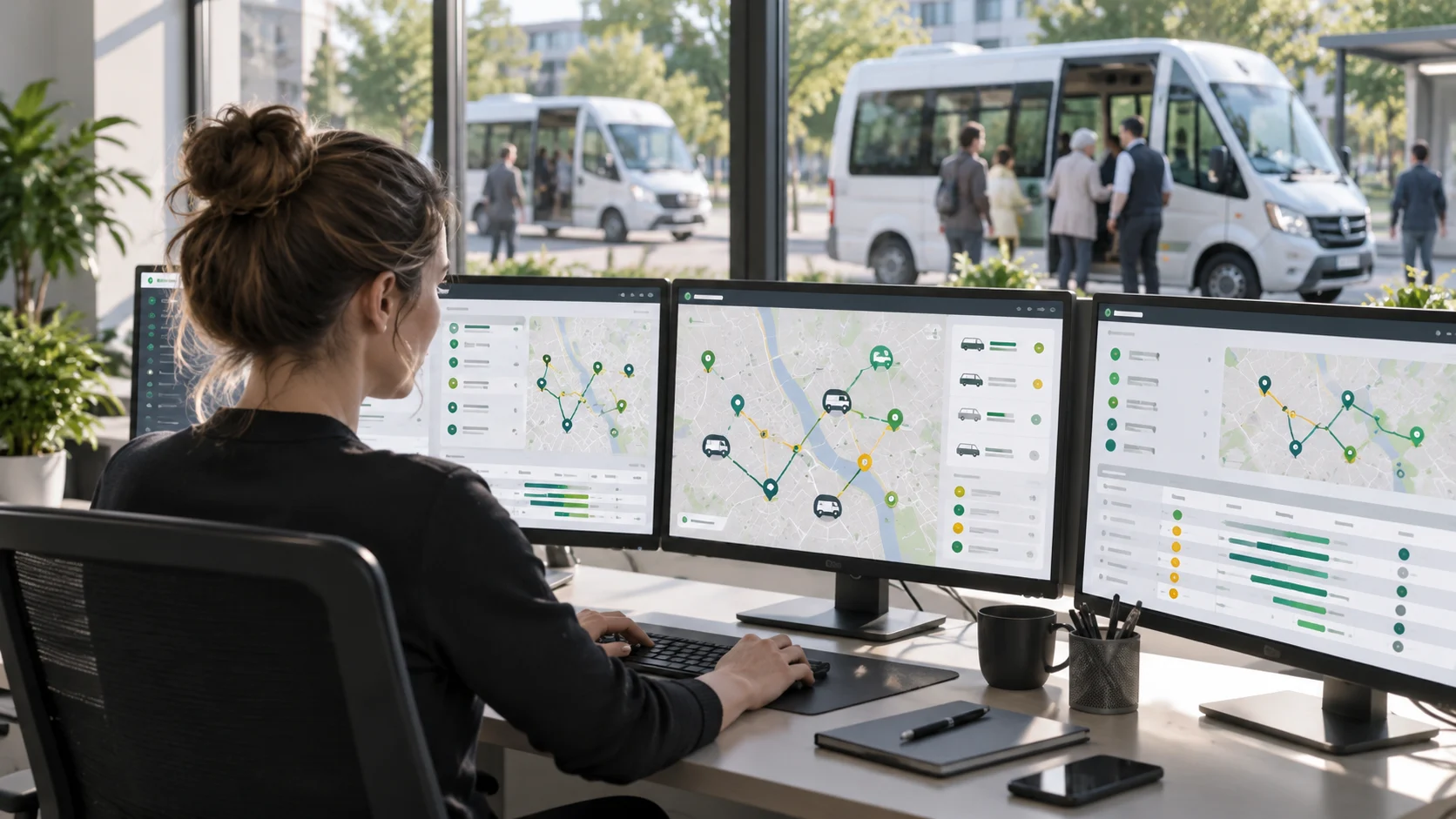
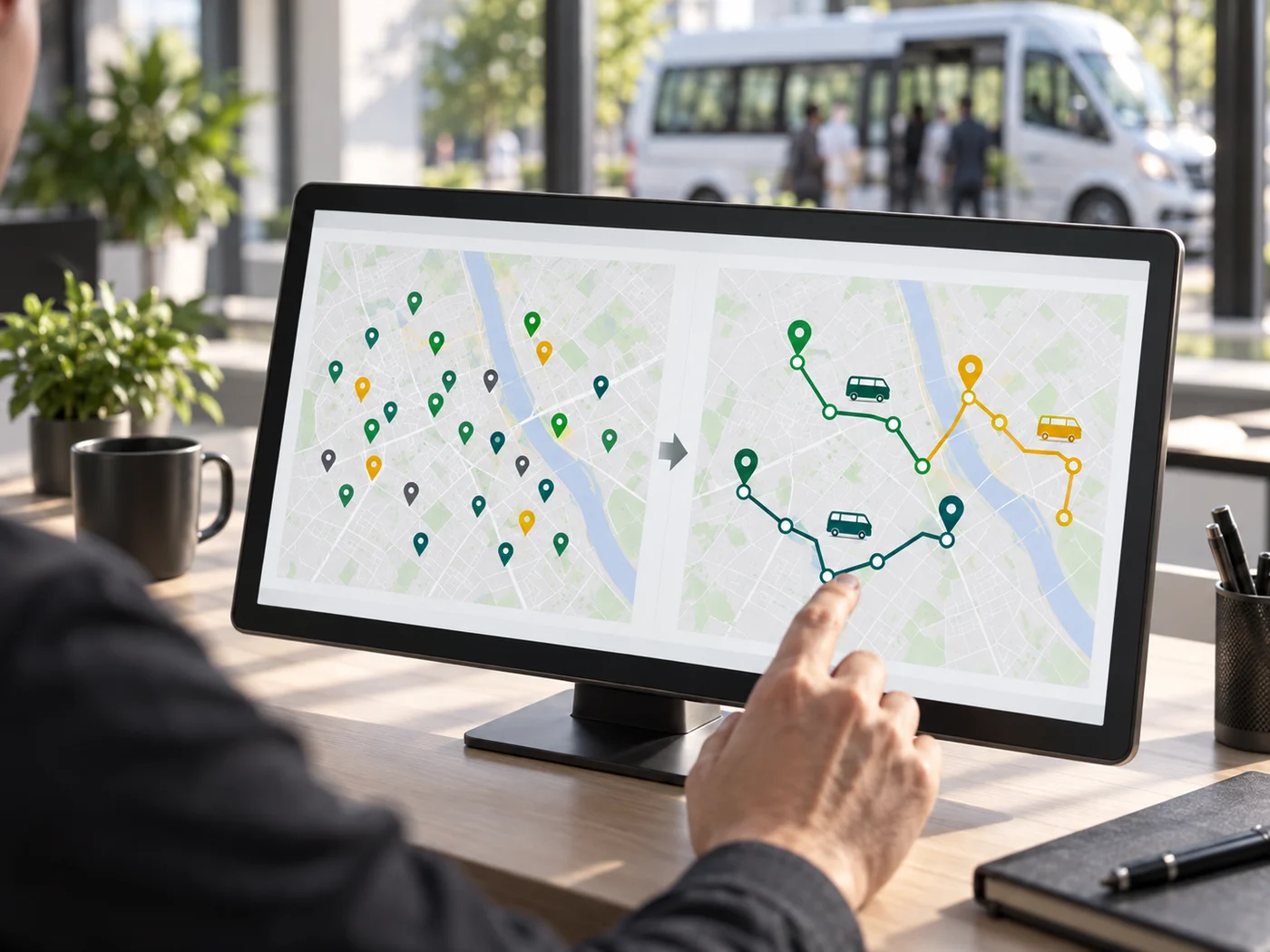
Manual dispatch, legacy routes and short-notice changes can create parallel journeys, empty mileage and excessive planning effort. Our mobility software is designed to bring the relevant constraints together and evaluate permissible combinations automatically.
The result is more than a digital job list: it is decision logic for transport scheduling, dispatching, routing and fleet utilisation.
School transport, patient transport, paratransit, public-sector mobility and demand-responsive transport all have different constraints. Reusable modules are configured and extended for the specific process.
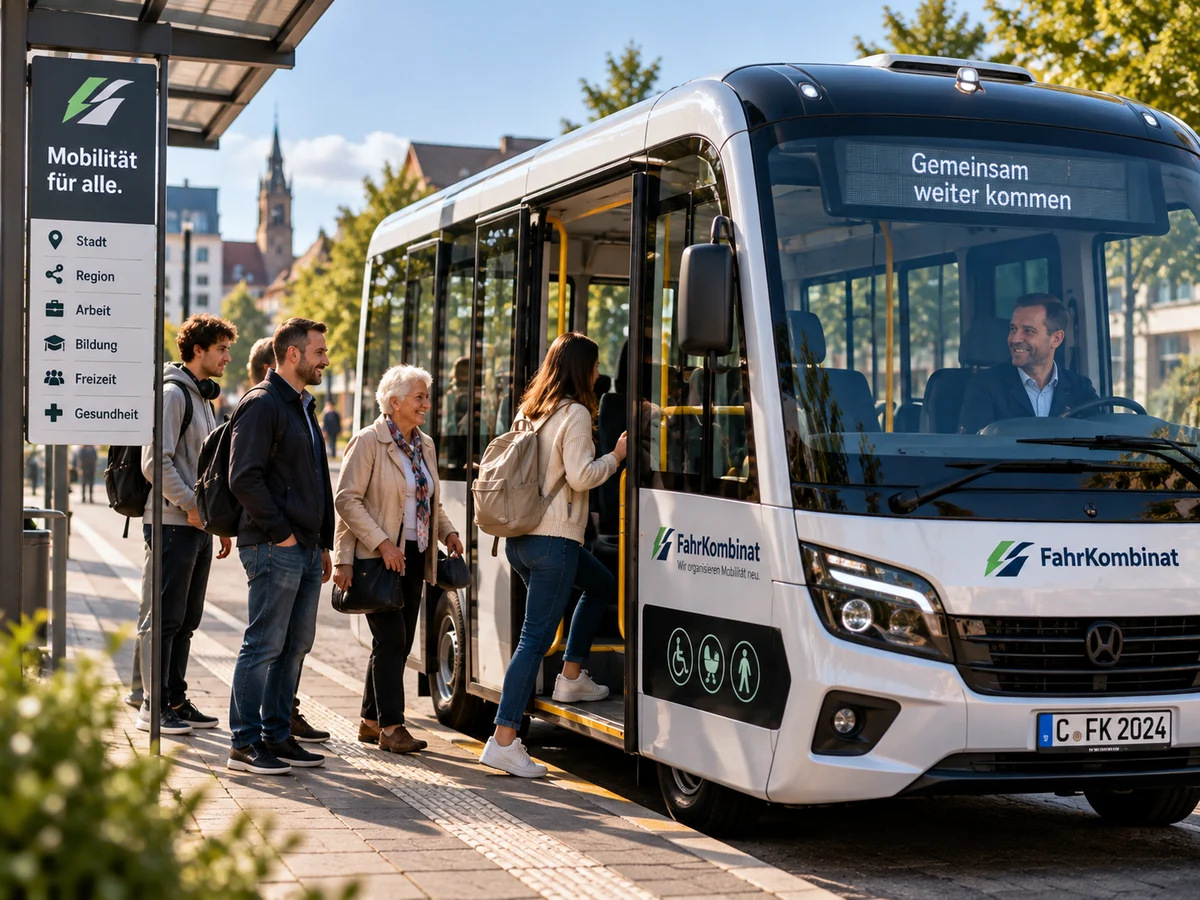
Live routing, pooling, partner operators, driver app, customer portal and live GPS.
Learn more →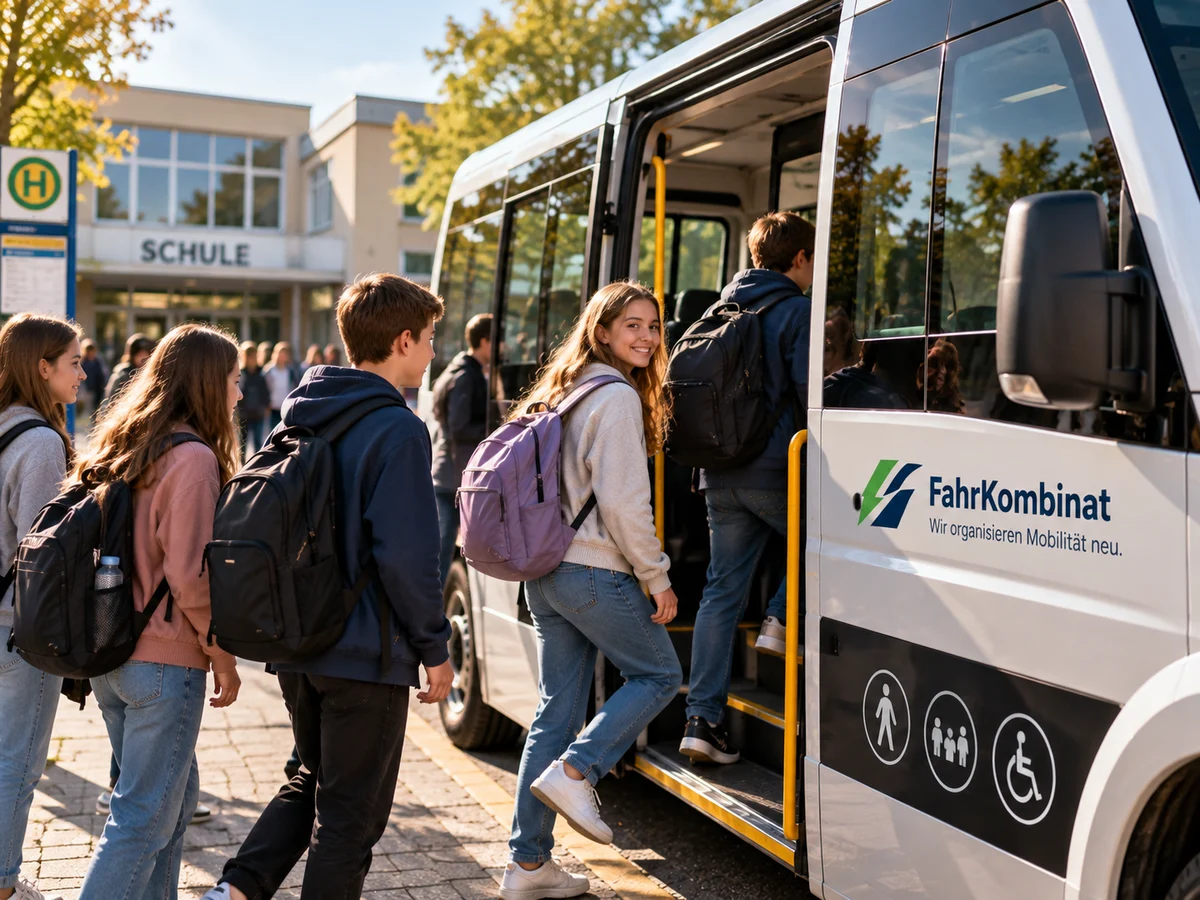
Parent portal, absences, timetables, dynamic scheduling and proof of service.
Learn more →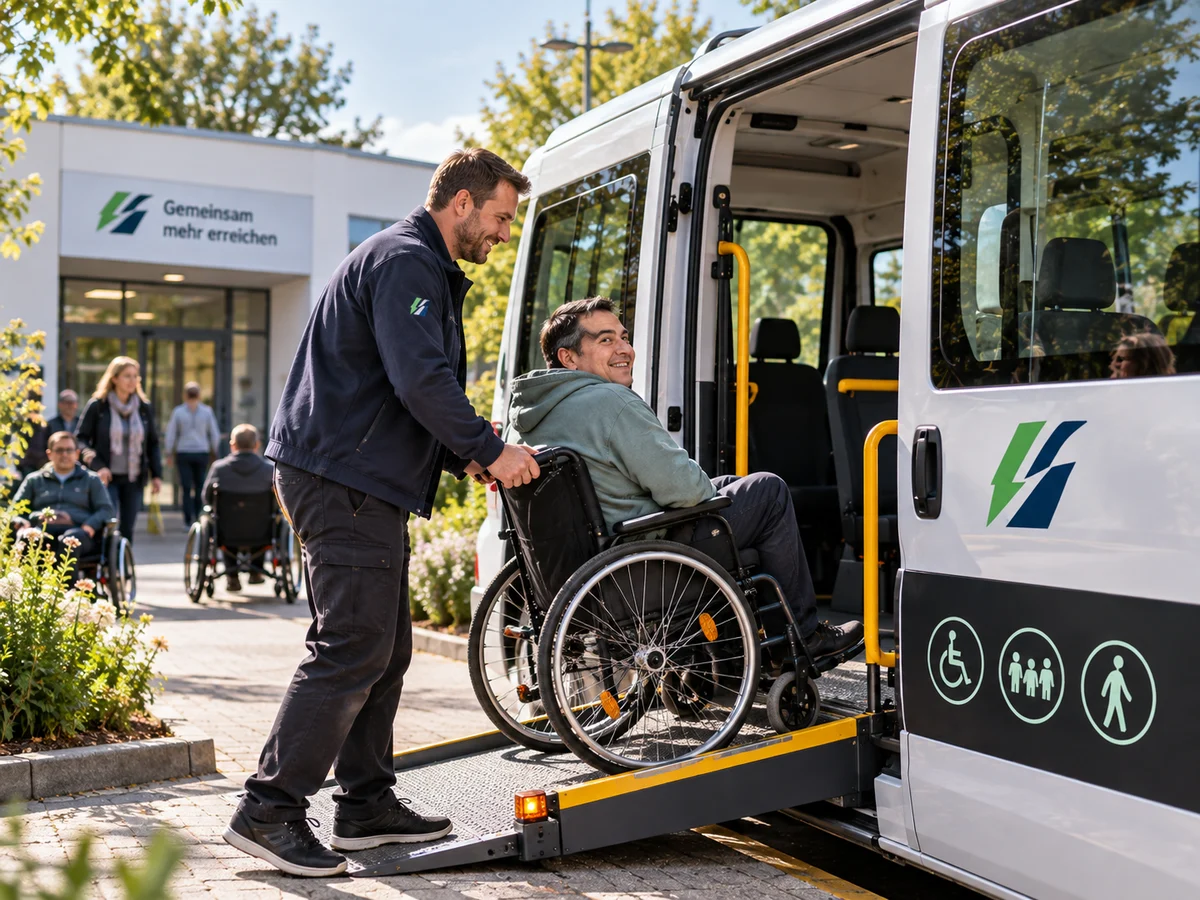
Special requirements, payers, document workflows, dynamic tours and cost control.
Learn more →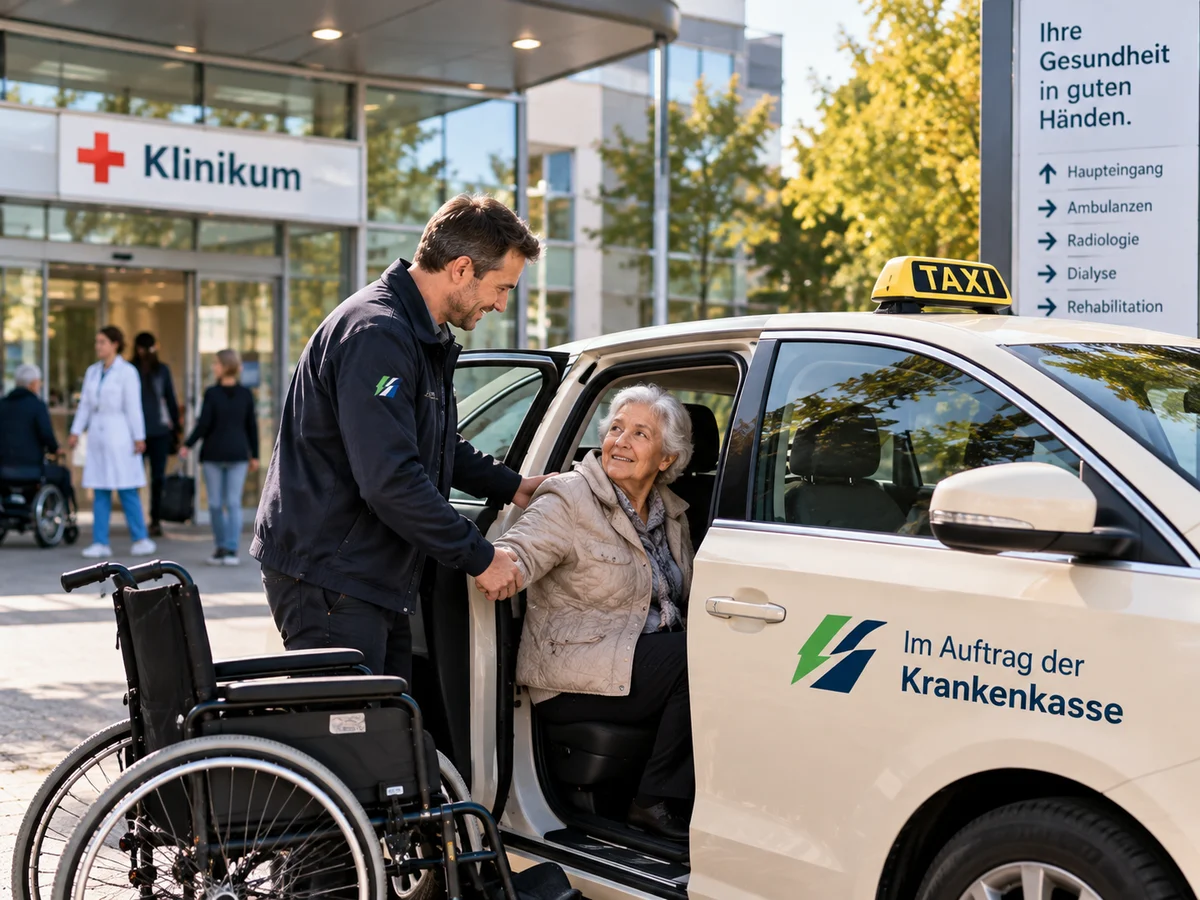
Recurring trips, contracted providers, pooling, service records and payer billing.
Learn more →
Solutions for school, social, youth and regional mobility services.
Learn more →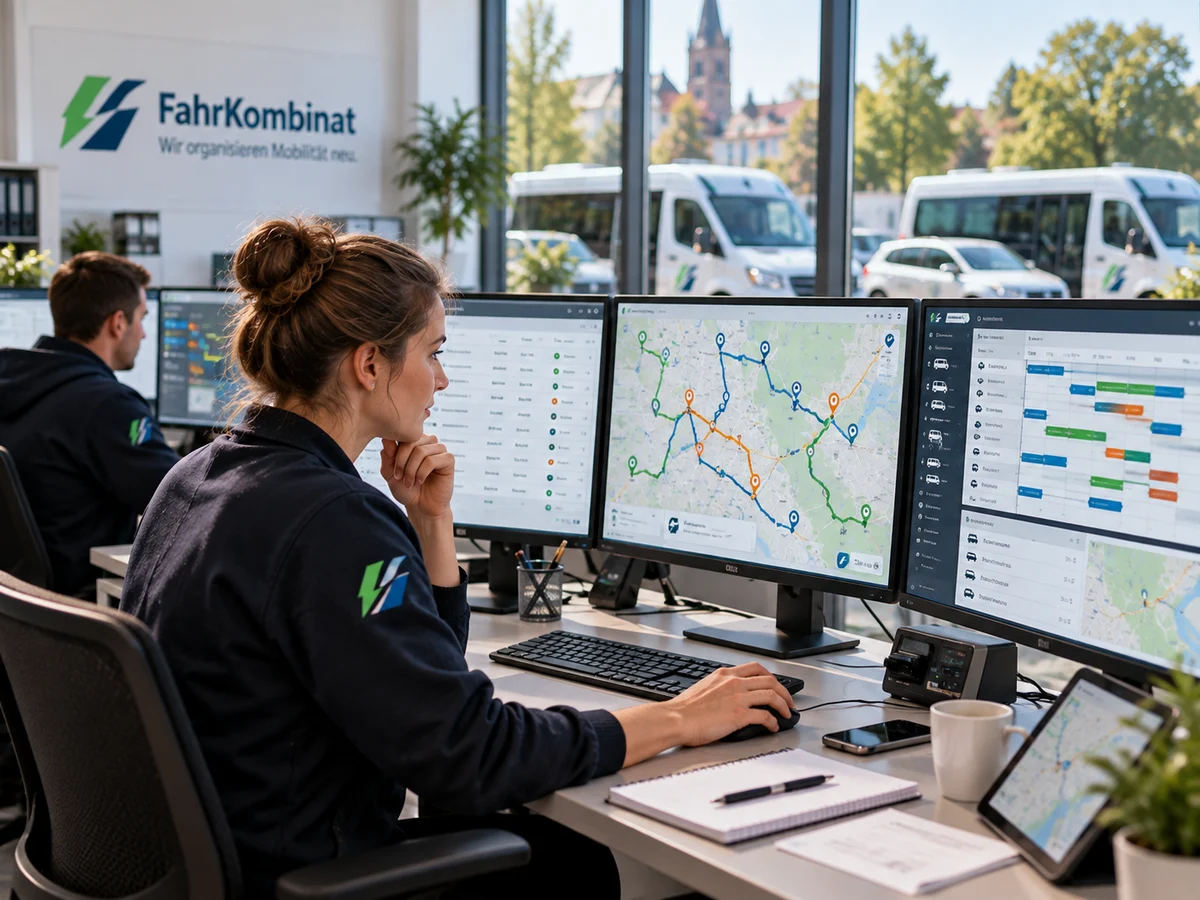
Depending on the project, the planning logic can consider pickup points, arrival times, maximum ride times, vehicle capacity, wheelchair positions, driver qualifications, active tours, follow-on work, payer rules and contractual conditions.
When conditions change, the plan can be recalculated. Dispatchers remain able to review and override decisions.
Reusable modules shorten implementation while allowing project-specific workflows.
The aim is to use existing vehicles more productively: fewer unnecessary empty and parallel journeys, higher occupancy and less manual rework. Any environmental effect is measured rather than assumed.
Relevant KPIs can include vehicles required, vehicle kilometres, empty mileage, occupancy, vehicle hours, cost per trip or passenger, punctuality and manual dispatch workload.
Understand passengers, vehicles, rules, operations and billing.
Define workflows, roles and decision logic.
Configure reusable modules and add project-specific functions.
Test with real data in a limited operating area.
Review KPIs and refine rules and workflows.
Provide the software, technical documentation and operating instructions.
Where appropriate, the individually adapted FahrKombinat solution can be installed on the customer’s infrastructure and handed over for its own operations.
The technical documentation required for operation is provided according to the project.
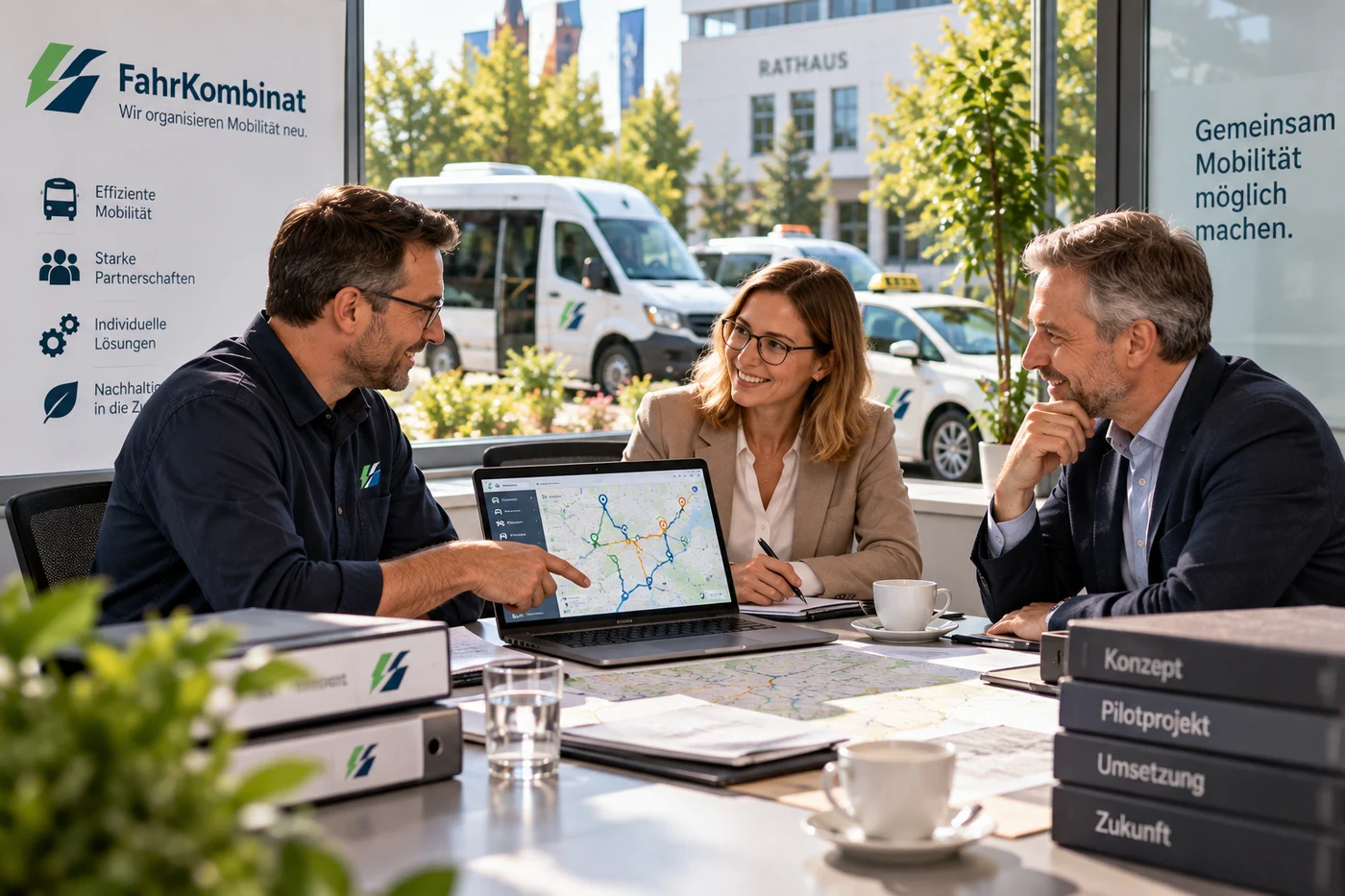
A digital system that can connect booking, scheduling, dispatching, driver communication, vehicle data, proof of service and billing.
Project-specific decision logic can include time windows, capacity, special requirements, qualifications, payer and contract rules during planning.
Demand-responsive transport, school transport, paratransit and workshop services, patient transport and public-sector mobility.
Depending on the project, routing logic can pool compatible requests, verify vehicle capacity and evaluate alternatives against defined rules.
No. Depending on the project, the solution can run on the customer’s own infrastructure and be handed over with the technical documentation required for operation.
Tell us how your passenger transport operation works today. We can examine which workflows can be digitised, automated, pooled and organised more efficiently.